
Expedition 🇿🇦 South Africa
Rhinoceros in South Africa
The armoured grazer — a prehistoric-looking giant whose horn is keratin, not bone, and whose survival hangs by a thread.
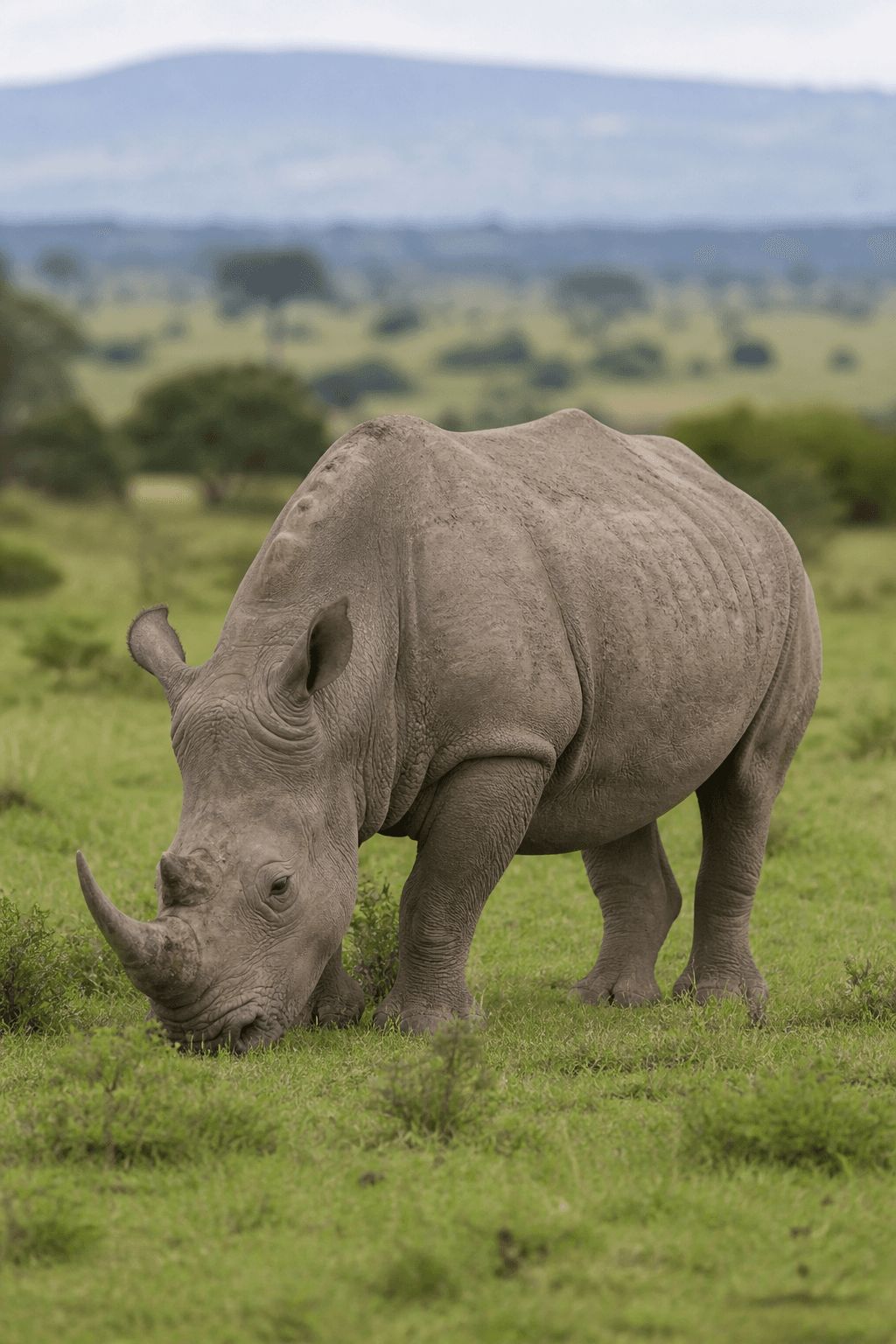
The species
The white rhinoceros is the largest rhino species and a square-lipped grazer of African grassland. Despite the name, it is grey — 'white' may come from the Afrikaans word 'wyd' meaning wide, referring to its broad mouth. Bulls weigh over two tonnes and mark territory with dung piles and scrapes.
Habitat in South Africa
Open grassland and savanna in South Africa, Namibia, and Kenya suit white rhinos. They need water, short grass for grazing, and intensive anti-poaching protection — most wild populations now live in fenced reserves.
Where to spot one
Boulders Beach
Cape Town
Boardwalks through a breeding colony of African penguins — close enough to hear them bray.
Kruger National Park
Mpumalanga & Limpopo
Classic African savanna — lions, leopards, elephants, rhinos, and buffalo on self-drive or guided safaris.
Addo Elephant National Park
Eastern Cape
Elephants, buffalo, and black rhino in thickets — malaria-free and family-friendly.
Table Mountain National Park
Cape Peninsula
Fynbos endemics, dassies on the summit, and the Cape of Good Hope where two oceans meet.
Conservation status
White rhinos are Near Threatened globally but northern white rhino is Critically Endangered — functionally extinct in the wild. Southern white rhinos survive mainly in South African reserves under heavy protection.
Free on iOS
Log the Rhinoceros in South Africa
Spot one in the wild — scan it in Catch'Um to log your common discovery.