
Field guide · common
Yak
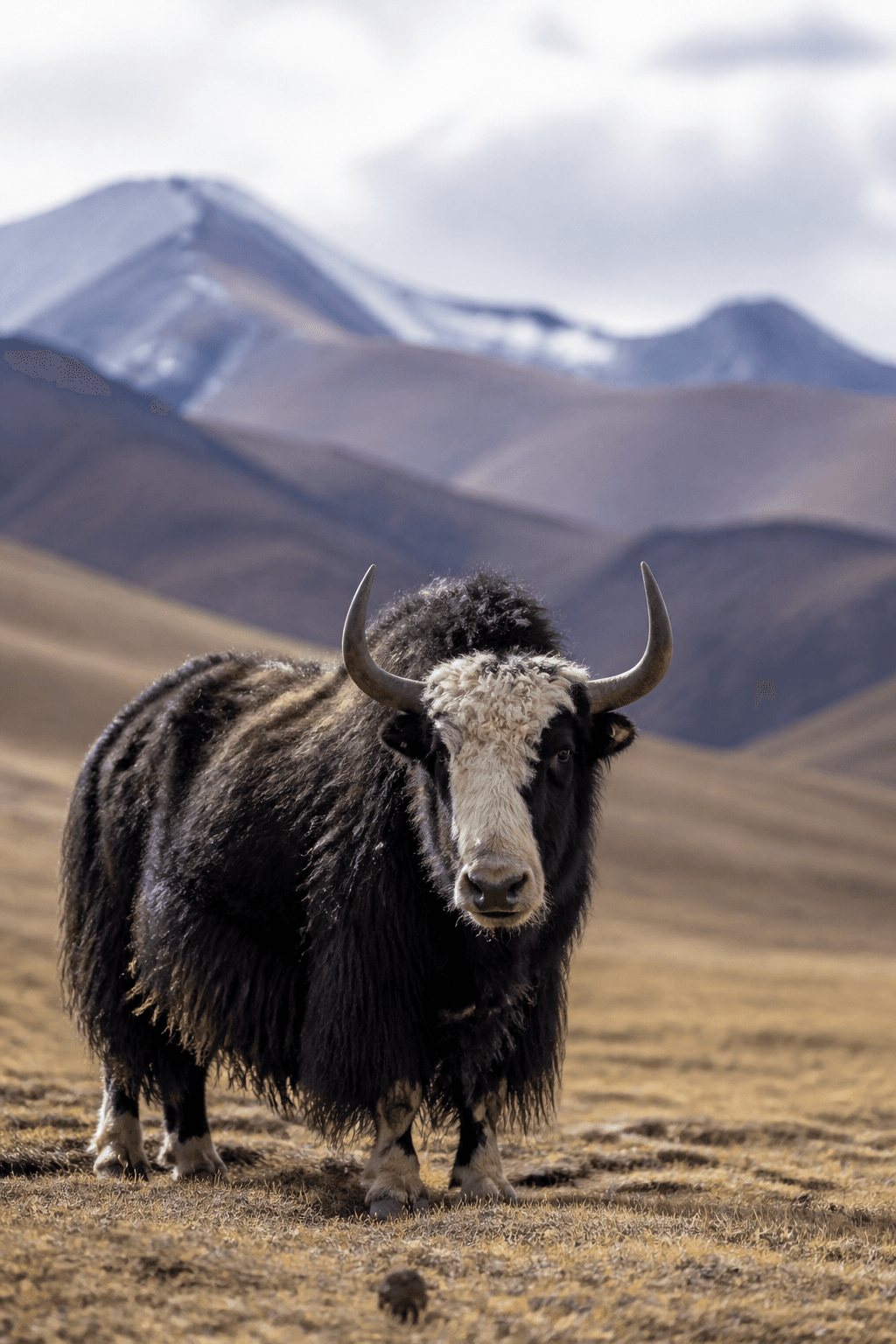
The shaggy giant of the roof of the world — a high-altitude bovine that carries life across the Tibetan Plateau.
Least Concern
Overview
The domestic yak has been the backbone of Himalayan and Tibetan life for thousands of years — providing milk, meat, fibre, and transport above 4,000 metres where cattle cannot survive. Long-haired, sure-footed, and placid, yaks graze alpine meadows that would kill lesser animals from cold and thin air.
Wild yaks still roam remote corners of the Tibetan Plateau — larger and more aggressive than their domestic cousins, with populations clinging on above 5,000 metres. Domestic yaks are central to nomadic culture across Bhutan, Nepal, and western China.
Habitat
Alpine grassland and high plateau above 3,000 metres in Tibet, Qinghai, Nepal, and Bhutan suit yaks. They withstand temperatures below minus 40°C and graze sparse vegetation where oxygen is half what it is at sea level.
Countries found
Interesting facts
- 01
Wild yaks survive at altitudes above 5,000 metres where oxygen is thin.
- 02
Yak wool is among the warmest natural fibres — finer than cashmere.
- 03
Domestic yaks have been herded on the Tibetan Plateau for over 4,000 years.
Conservation status
Domestic yaks are abundant across the Himalaya. Wild yaks are Vulnerable, with fewer than 10,000 remaining on the Tibetan Plateau due to hunting and hybridisation with domestic stock.


Keep exploring
Free on iOS
Catch the Yak
Spot one in the wild — then scan it in Catch'Um to log your common discovery.