
Field guide · common
Red Panda
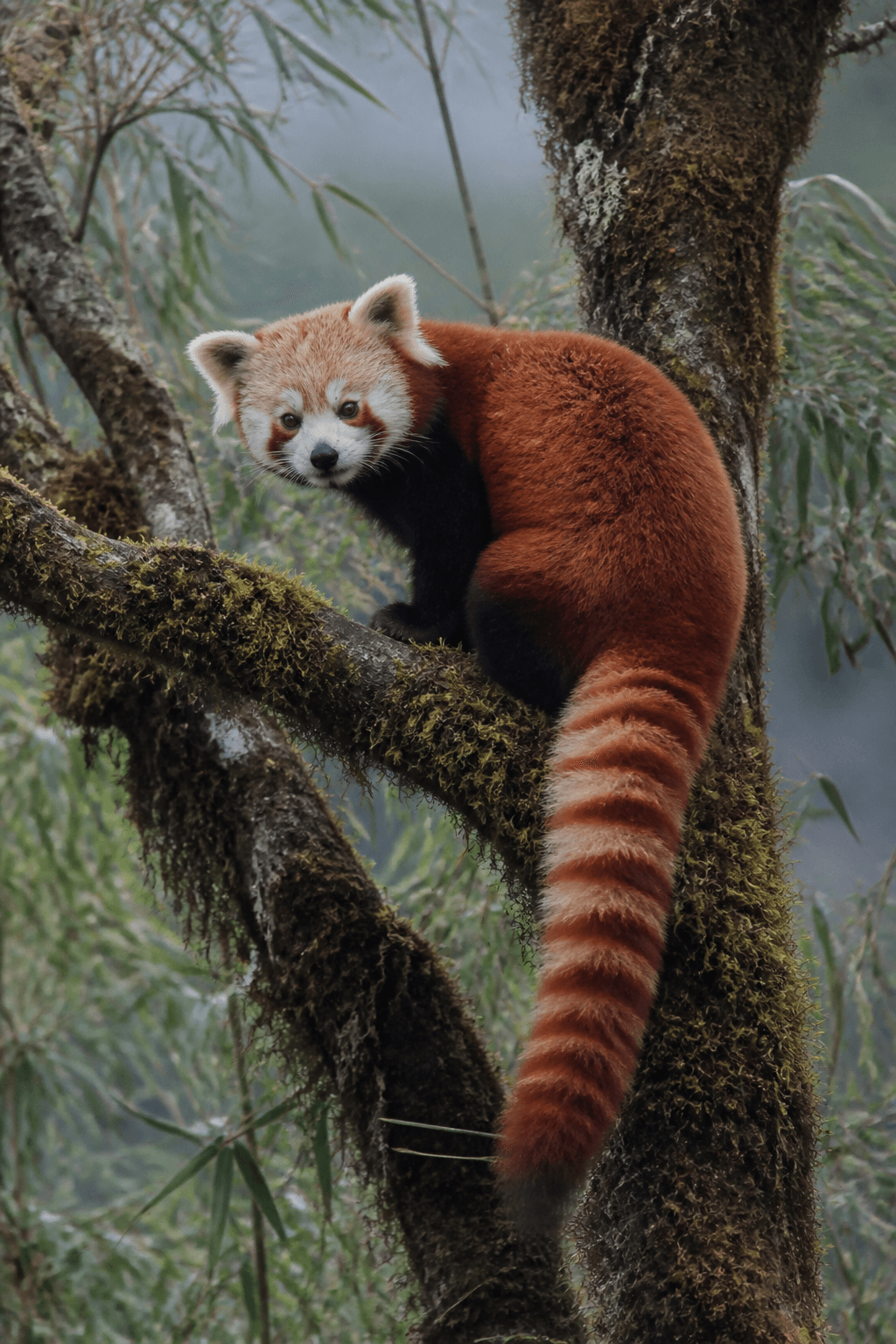
The firefox of the Himalaya — a russet tree-dweller with a ringed tail that is neither bear nor raccoon, but its own ancient family.
Endangered
Overview
The red panda is a small arboreal mammal of montane bamboo forest, with chestnut fur, white face markings, and a long banded tail it uses for balance in the canopy. Once thought related to raccoons, DNA showed it belongs to its own unique family — Ailuridae — with no close living relatives.
Red pandas are shy and mostly nocturnal, foraging for bamboo leaves, berries, and bird eggs in the understory. They wrap their tails around themselves for warmth in cold Himalayan nights and communicate with twittering calls and scent marks.
Habitat
Cool, moist bamboo forest at elevations between 2,200 and 4,800 metres in the eastern Himalaya and southwestern China. They need dense canopy cover and bamboo understory, and are threatened by deforestation and habitat fragmentation.
Countries found
Interesting facts
- 01
Red pandas were classified as raccoons until DNA showed they are their own family.
- 02
They have a false thumb — an extended wrist bone for gripping bamboo.
- 03
Their name 'panda' comes from a Nepali word meaning bamboo eater.
Conservation status
Red pandas are Endangered, with fewer than 10,000 adults remaining in the wild. Habitat loss and poaching for the pet trade are the main threats across their Himalayan range.
Related discoveries

Keep exploring
Where it lives
Related discoveries
Free on iOS
Catch the Red Panda
Spot one in the wild — then scan it in Catch'Um to log your common discovery.