
Species archive — rare
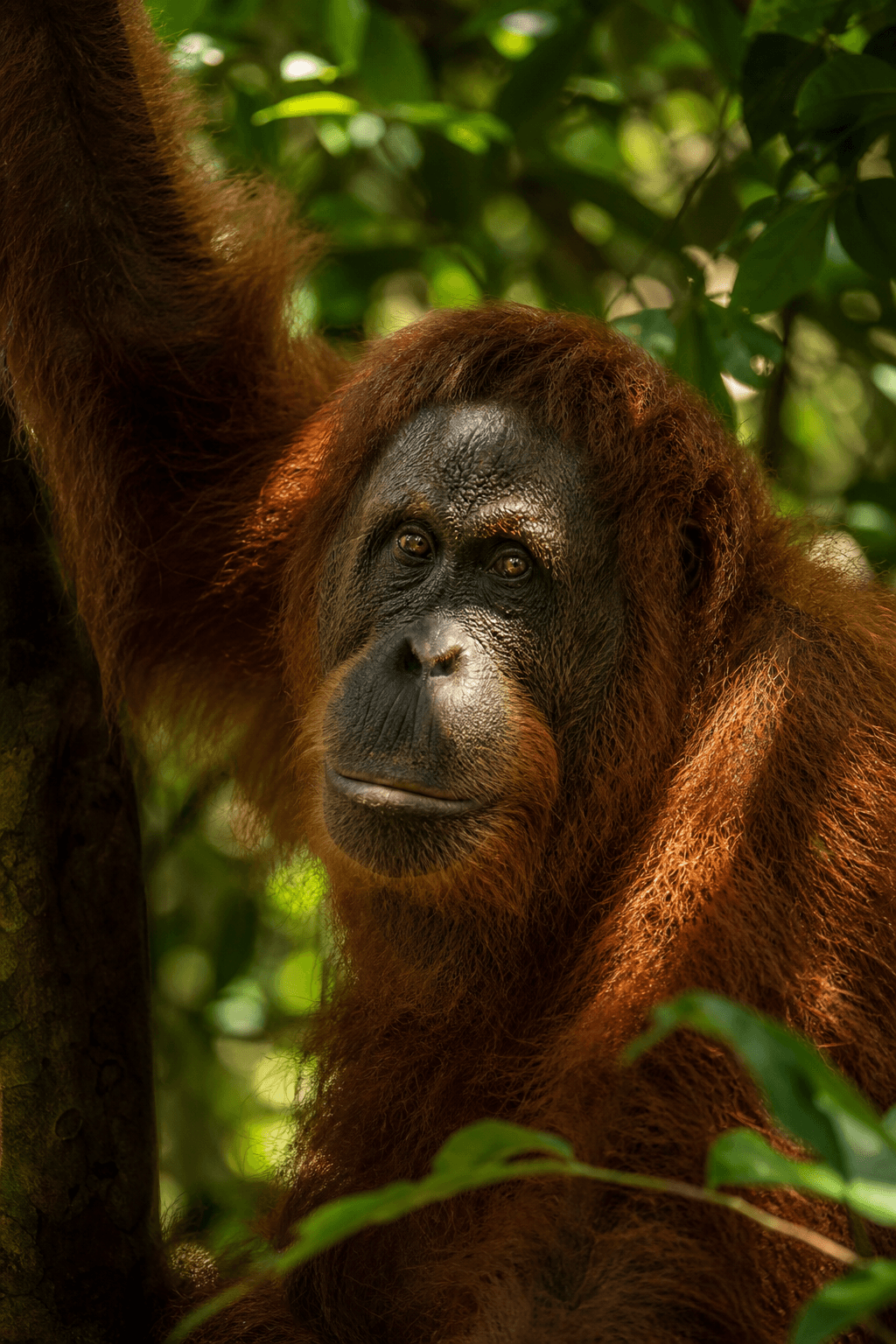
Orangutan
The person of the forest — a red-haired great ape found only in the rainforest canopies of Borneo and Sumatra.
Pongo pygmaeus · Critically Endangered
 Rare
Rare🦧 Orangutan
★★★★★
Overview
The orangutan is the largest tree-dwelling mammal on Earth and one of our closest living relatives, sharing roughly 97% of our DNA. Its name comes from the Malay words orang hutan — person of the forest — and anyone who has watched one move through the canopy understands why. Deliberate, intelligent, and startlingly expressive, orangutans plan routes through the treetops days in advance and pass tool-use techniques from mother to infant.
Unlike other great apes, orangutans live largely solitary lives. Adult males can weigh over 90 kilograms and develop the distinctive cheek flanges that signal dominance, while mothers raise a single infant for up to eight years — the longest childhood of any wild animal.
Habitat
Orangutans are found exclusively in the lowland tropical rainforests of Borneo and Sumatra, where they spend more than 90% of their lives in the canopy. They favour river valleys and peat-swamp forests rich in fruiting trees, building a fresh sleeping nest of folded branches every single night.
Countries found
Interesting facts
- 01
Orangutans build a new nest to sleep in every night — over 30,000 in a lifetime.
- 02
They are the only great ape found in Asia; all others live in Africa.
- 03
An orangutan's arm span can reach 2.4 metres — longer than its body height.
- 04
They use leaves as umbrellas in the rain and as gloves for handling spiny fruit.
- 05
Mothers nurse and carry their young for up to eight years, the longest of any wild mammal.
- 06
Flanged males produce a 'long call' that carries more than a kilometre through dense forest.
Conservation status
Bornean orangutan populations have fallen by more than half since 1999, driven by deforestation for palm oil, logging, and fires. Protected reserves and rehabilitation centres in Kalimantan and Sumatra are now critical strongholds for the species.
Keep exploring
Where it lives
From the Field Guide
Related discoveries
Free on iOS
Catch the Orangutan
A rare discovery — find it in the wild and add it to your collection.
