
Field guide · rare
Axolotl
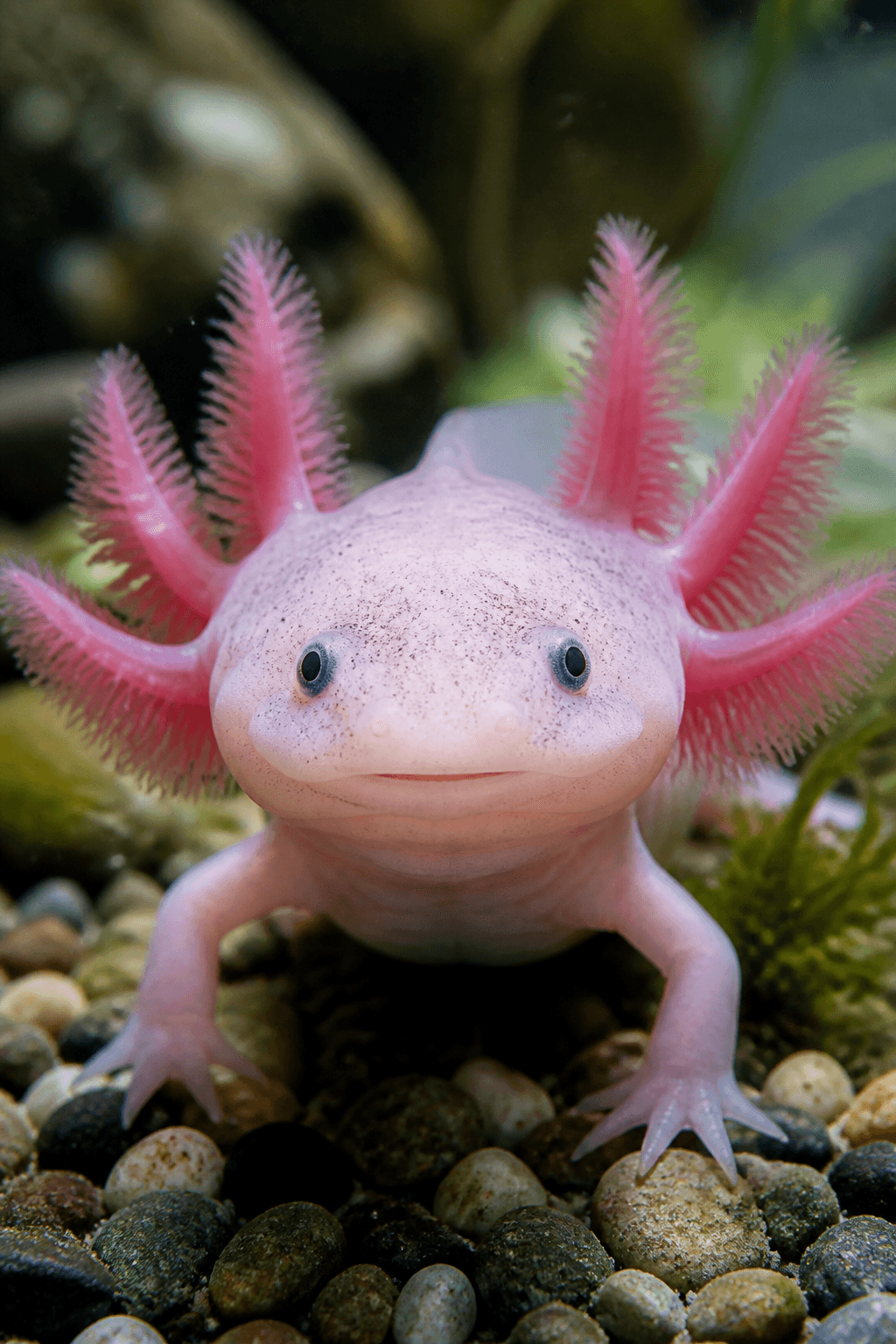
The smiling salamander — a Mexican lake creature that never grows up and can regenerate its brain.
Critically Endangered
Overview
The axolotl is one of science's most remarkable animals — a salamander that retains its larval form throughout life, never undergoing metamorphosis to leave the water. With feathery external gills and a permanent smile, it has become an internet icon and laboratory superstar.
Axolotls can regenerate lost limbs, spinal cord, heart tissue, and even sections of brain — abilities that drive medical research into human healing. In the wild, they survive only in the canals and wetlands of Mexico City.
Habitat
Freshwater lakes, canals, and wetlands in the Valley of Mexico once held abundant axolotls. Today they survive mainly in Lake Xochimilco's canal system, threatened by pollution, invasive fish, and urban expansion.
Countries found
Interesting facts
- 01
Axolotls can regenerate lost limbs, parts of their heart, and even sections of brain.
- 02
They never metamorphose — keeping gills and an aquatic life into adulthood.
- 03
Wild axolotls are nearly extinct; most exist in labs and aquariums.
Conservation status
Axolotls are Critically Endangered in the wild, with perhaps fewer than 1,000 remaining in Lake Xochimilco. Captive breeding for research and the pet trade keeps the species alive outside Mexico.
Related discoveries
Keep exploring
Where it lives
Related discoveries
Free on iOS
Catch the Axolotl
Spot one in the wild — then scan it in Catch'Um to log your rare discovery.