
Expedition 🇧🇼 Botswana
Hippopotamus in Botswana
The river horse — a two-tonne wall of muscle that spends its days submerged and its nights grazing on land.
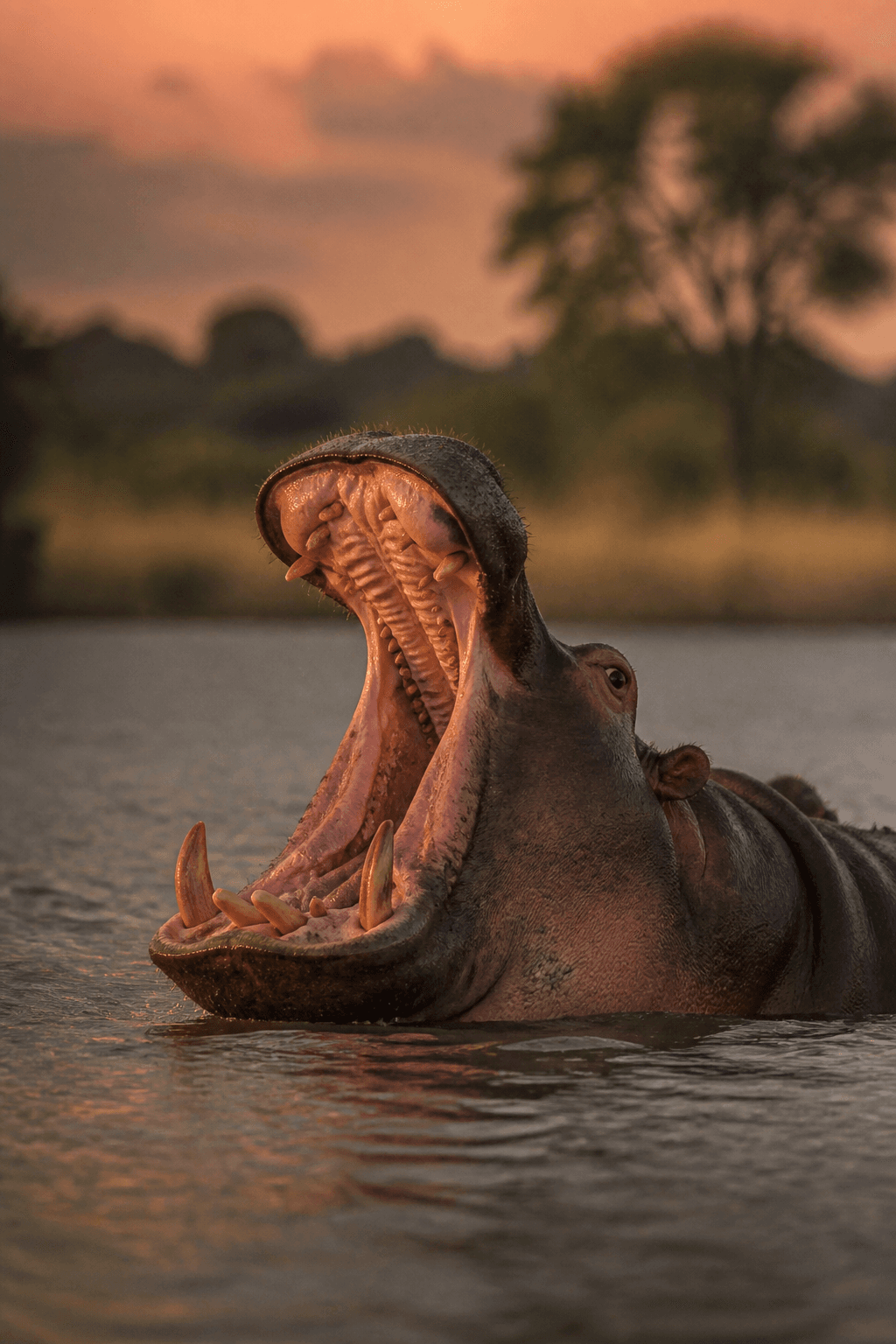
The species
The hippopotamus is Africa's most dangerous large mammal despite its placid appearance. Bulls weigh up to 1,500 kilograms and defend river territories with massive jaws that can snap a canoe in half. By day they lounge in water to stay cool; by night they walk kilometres to graze on grass.
Habitat in Botswana
Rivers, lakes, and wetlands across sub-Saharan Africa hold hippos. They need deep water for daytime submersion and nearby grassland for nocturnal feeding, and are found from the Okavango Delta to the Mara River and Zambia's Luangwa Valley.
Where to spot one
Kalahari Desert
Central Botswana
Red sand and sparse scrub — home to meerkat mobs, gemsbok, and brown hyenas at burrow entrances at dawn.
Okavango Delta
Northern Botswana
A river that never reaches the sea — mokoro trips through papyrus channels with elephants, hippos, and painted dogs.
Chobe National Park
Northern Botswana
One of Africa's greatest elephant concentrations along the Chobe River at sunset.
Makgadikgadi Pans
Northeast Botswana
Vast salt flats that flood seasonally — flamingos, zebra migrations, and meerkats on the pan edges.
Conservation status
Hippos are Vulnerable, with populations declining from habitat loss, drought, and illegal hunting for ivory canine teeth. Protected rivers in Kenya and Botswana remain strongholds.
Keep exploring
Free on iOS
Log the Hippopotamus in Botswana
Spot one in the wild — scan it in Catch'Um to log your common discovery.