
Field guide · common
Sloth
The slow-motion acrobat — a tree-dwelling mammal so unhurried that moss grows in its fur.
Least Concern
Overview
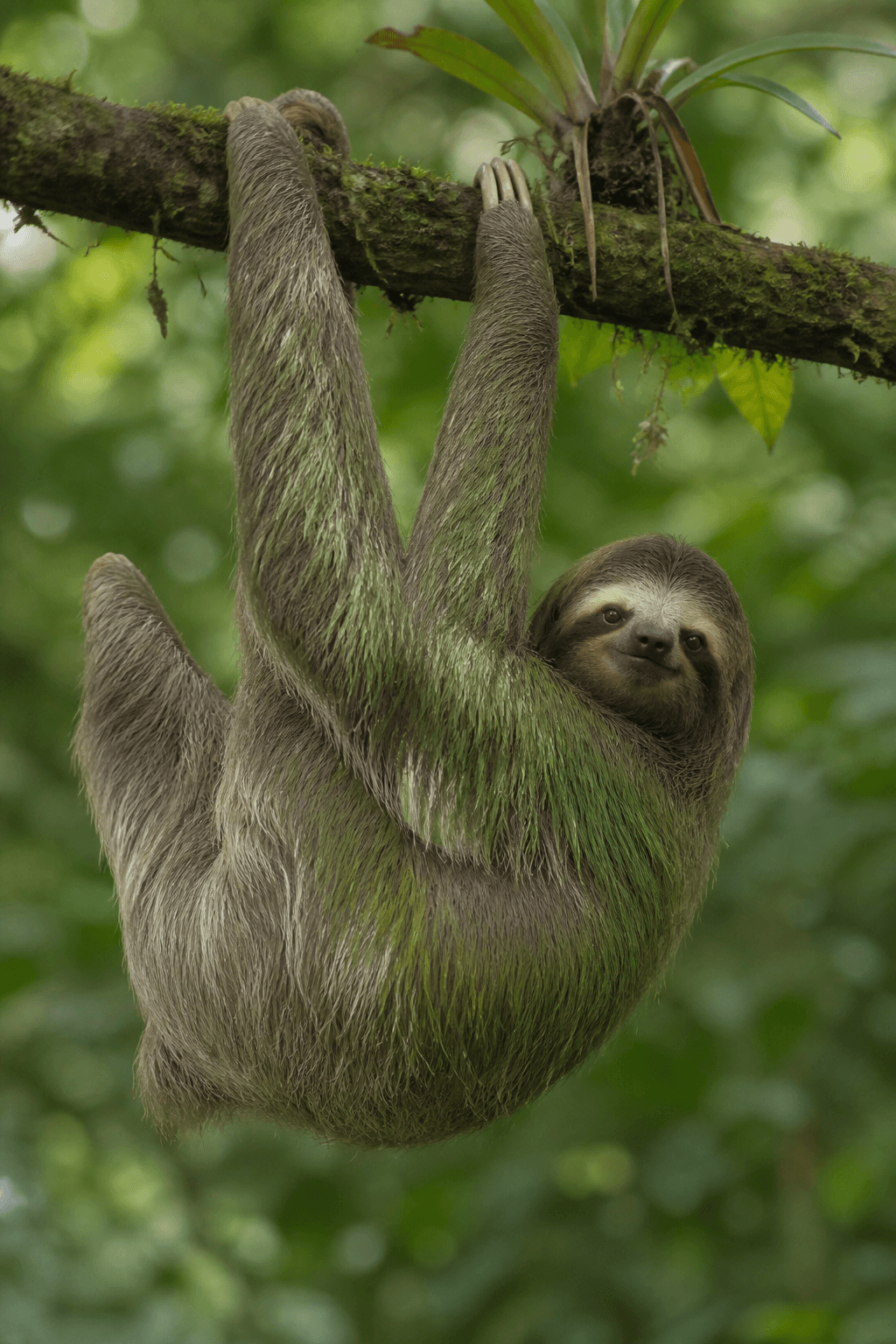
Sloths are the undisputed champions of taking it easy. Three-toed sloths spend nearly their entire lives hanging upside down in rainforest canopy, moving so slowly that green algae grow in their fur — camouflage that also feeds moths living in the coat.
Everything about sloths is adapted for energy conservation: a slow metabolism, low muscle mass, and a diet of leaves that takes days to digest. They descend to the ground only once a week to defecate — a risky journey that puzzles scientists.
Habitat
Lowland tropical rainforest canopy in Costa Rica, Panama, and across Central and northern South America holds three-toed sloths. They need continuous forest with cecropia and other favoured tree species.
Countries found
Interesting facts
- 01
Sloths move so slowly that algae grows on their fur — camouflage and extra nutrients.
- 02
They can rotate their heads 270 degrees to scan for predators.
- 03
Sloths are excellent swimmers — they sometimes cross rivers between trees.
Conservation status
Brown-throated three-toed sloths are Least Concern, though deforestation in Central America reduces habitat. Costa Rica's protected forests support healthy populations.
Keep exploring
Where it lives
Free on iOS
Catch the Sloth
Spot one in the wild — then scan it in Catch'Um to log your common discovery.