
Field guide · common
Meerkat
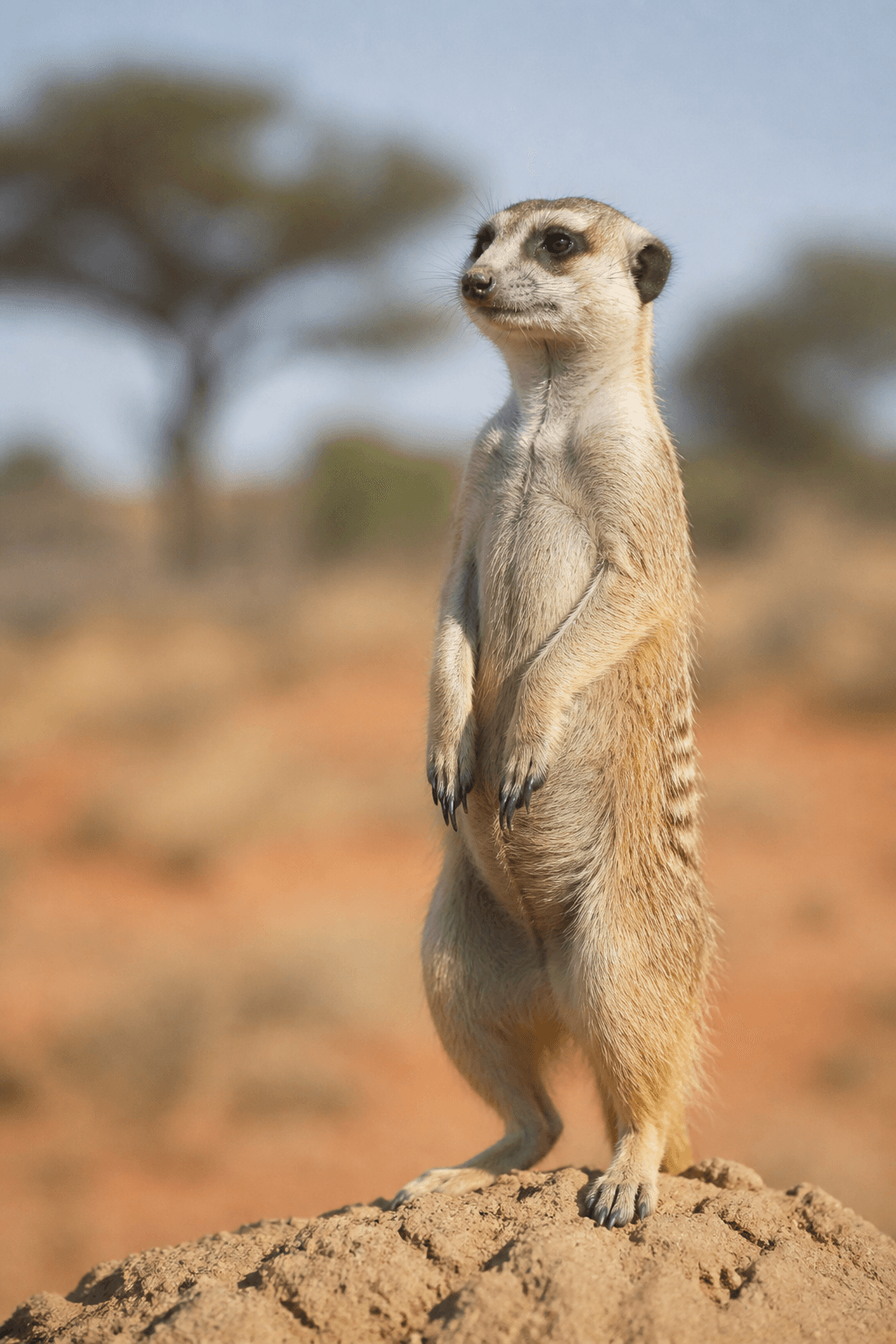
The desert sentinel — a small mongoose that stands upright on hind legs, scanning the Kalahari sky while its family digs for scorpions below.
Least Concern
Overview
Meerkats are among the most cooperative mammals on Earth. Groups of up to 50 share burrow systems in hard Kalahari soil, babysit each other's pups, and post sentries that stand tall on rear legs, swivelling to spot eagles and jackals.
While one meerkat watches the sky, the rest forage for insects, scorpions, and small reptiles — often teaching pups which prey is safe to handle. Their dark eye patches reduce glare, like natural sunglasses.
Habitat
Dry savanna, scrub, and semi-desert in Botswana, Namibia, and South Africa hold meerkats. They need hard ground for burrows and open visibility for sentinel duty, and have become famous through wildlife films in the Kalahari.
Countries found
Interesting facts
- 01
Meerkats take turns standing guard while the group forages — one always on sentry duty.
- 02
They are immune to some scorpion venom.
- 03
Sentries give different alarm calls for ground and aerial predators.
Conservation status
Meerkats are Least Concern across southern Africa. They are popular in ecotourism and wildlife documentaries, with habituated groups at research sites in Botswana.
Related discoveries
Keep exploring
Where it lives
Related discoveries
Free on iOS
Catch the Meerkat
Spot one in the wild — then scan it in Catch'Um to log your common discovery.